HomeBlogApplication SecurityDevSecOps Explained: Integrating Security into Software Development
DevSecOps Explained: Integrating Security into Software Development

What is DevSecOps and How does it Work?
DevSecOps stands for Development, Security, and Operations. It is an approach that embeds security controls, testing, and governance into every phase of the software development lifecycle.
In a traditional development setup, security testing may happen towards the end of the release cycle. By that point, developers may have to go back to code that has already been written and tested. Finding a vulnerability late can mean extra work, changes to the release schedule, or a decision to accept the risk.
DevSecOps brings security activities closer to the development work. Developers can follow secure coding practices and check source code for vulnerabilities as they build an application. Dependencies can be checked for known vulnerabilities, while CI/CD pipelines can also look for exposed secrets and insecure configurations.
The checks continue as the application moves towards deployment. Dynamic testing can be used against a running application, APIs can be tested for security weaknesses, and container images can be checked before they are used in production.
There is also work to do after an application goes live. A newly disclosed vulnerability can affect an existing dependency, or a change in the environment can introduce a security problem. Monitoring and vulnerability management help teams identify these issues and decide what needs attention.
That is the practical idea behind DevSecOps. Security becomes part of the development workflow, with different checks taking place at different points rather than waiting for one security review at the end.
This approach supports secure software development because security considerations start during development and continue through testing, deployment and ongoing maintenance.
Why DevSecOps Matters for Modern Software Security
Software development has become faster and more dependent on cloud services, APIs, open-source components, and automated delivery pipelines. Each of these adds security considerations that need attention during development.
A security review at the end of a release cycle may identify a serious issue, but fixing it at that stage can be difficult. The code may already be ready for deployment; dependencies may have been added, and infrastructure may already be configured. DevSecOps brings security checks into the work earlier, making it easier to identify and address problems while development is still underway.
Faster Software Release Cycles
Development teams may release changes frequently, particularly when CI/CD pipelines are used. Manual security reviews for every change are difficult to maintain at that pace.
Automated checks can run alongside the development pipeline. Source code, dependencies, secrets and configurations can be checked without making every security review a separate step. Security testing can also be repeated as the application changes.
This allows security teams to spend more time on findings that require investigation and less time on checks that can be handled automatically.
Cloud, APIs and Software Supply Chain Risks
Applications now depend on more than their own source code. Cloud infrastructure, APIs, containers, third-party libraries and open-source packages can all introduce security risks.
A vulnerable dependency, an exposed API or a poorly configured cloud resource can affect an application even when its own code has been written correctly. DevSecOps brings these areas into the development and delivery process through activities such as software composition analysis, API security testing, infrastructure checks and container scanning.
This is also where DevSecOps security assessment becomes useful. Teams can identify weaknesses across the application and the supporting components rather than looking at the application code in isolation.
Security and Compliance Requirements
Security requirements also come from outside the development team. Depending on the sector and the type of data being handled, applications may need to meet regulatory or contractual requirements.
DevSecOps can help incorporate these requirements into development workflows. Security controls can be defined early, checked during development, and monitored after deployment. This provides a more consistent way to track security requirements as applications change.
For teams working with sensitive data or regulated systems, this approach can make security and compliance activities part of the regular development cycle rather than a separate exercise before an audit or release.
Core Principles of DevSecOps
DevSecOps changes where and when security is considered during software development. Security needs to be part of decisions made during planning, coding, testing and deployment, while teams also need a way to respond to issues found after an application is released.
The approach is built around a few practical principles. These include bringing security into the design stage, using automation for repeatable checks, sharing responsibility across teams, and giving developers useful feedback when a problem is found. Together, these practices help make security a regular part of software development rather than something handled separately.
Security by Design and Shift Left
Security considerations should begin when an application is being planned. Threat modelling can help identify possible attack paths, while security requirements and architectural reviews can highlight weaknesses before development moves too far ahead.
This is commonly described as shift-left security, where security checks are moved closer to the start of the development process. Secure coding practices and early code analysis then help developers deal with issues during development instead of waiting for a later security review.
Automation and Continuous Security Testing
Security checks need to keep pace with the way software is developed and released. Automated testing can be added to development and CI/CD workflows to check source code, dependencies, secrets, infrastructure and applications.
Different tests have different purposes. SAST can examine source code; software composition analysis can identify vulnerable dependencies, while DAST can test an application in a running environment. Using these checks at appropriate stages gives teams regular visibility into security issues.
Shared Responsibility and Continuous Feedback
Security is a shared responsibility across development, security and operations teams. Developers need to understand the security requirements for the code they create, while security teams can provide guidance on risks, testing and remediation.
Feedback also needs to reach the people who can act on it. When a security issue is identified during development, the relevant details can be passed back to the development team while the code and its context are still familiar. This makes security findings part of the normal development workflow rather than a separate activity.
How DevSecOps Works across the Software Development Lifecycle
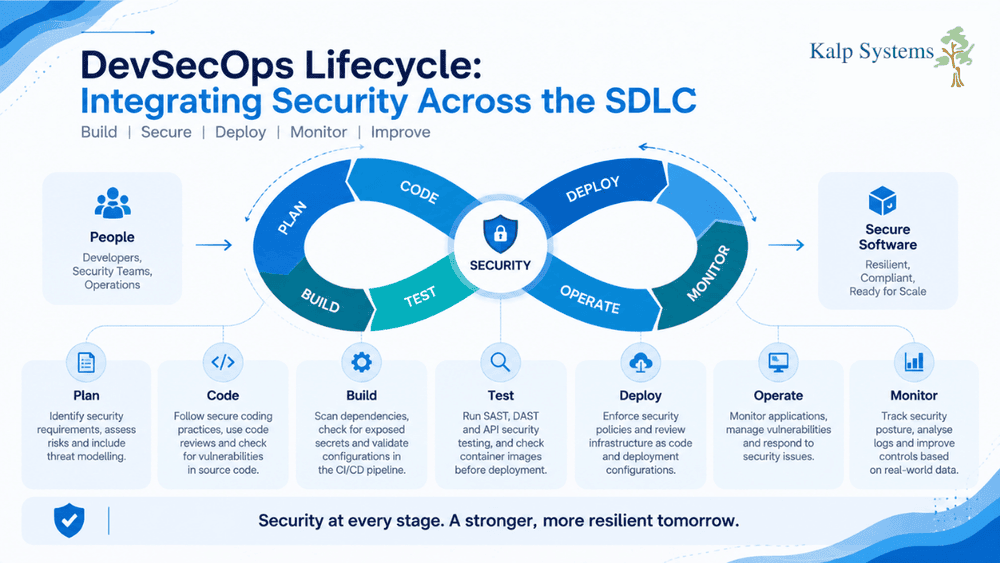
Security needs to follow the application as it moves through development. The checks used at the planning stage will be different from those used before deployment or after the application is running. DevSecOps connects these activities so that security remains part of the development workflow from the first design decisions through ongoing monitoring.
Planning and Development
Security starts with the decisions made before the code is written. Threat modelling can help identify possible attack paths, while security requirements define the controls an application needs to follow. Teams can also review the frameworks, libraries and other components planned for the application.
During development, secure coding practices help reduce common vulnerabilities such as SQL injection and cross-site scripting. Static application security testing, or SAST, can examine source code for weaknesses, while software composition analysis can identify vulnerabilities in open-source dependencies.
Finding these issues while developers are working on the relevant code gives them a better opportunity to fix them before the application moves further through the pipeline.
Build, Testing and Deployment
As code moves into the build and CI/CD pipeline, automated security checks can be added alongside the existing build and test activities. Secret scanning can identify credentials that have been accidentally included in code, while Infrastructure as Code checks can flag insecure configurations.
Further testing takes place before deployment. Dynamic application security testing, or DAST, examines the application while it is running. API security testing can check areas such as authentication, authorisation and data exposure. Container image scanning can also identify vulnerabilities in components that will be deployed.
The exact checks will depend on the application and its environment. The important point is that security testing takes place as part of the delivery process, rather than being left until the final stage.
Operations, Monitoring and Runtime Security
Security work continues once the application is deployed. New vulnerabilities can be disclosed after release; dependencies can change, and activity within the application can reveal issues that were not visible during development.
Runtime security, vulnerability management, logging and monitoring provide visibility into what is happening after deployment. These activities can help teams identify suspicious behaviour, investigate vulnerabilities and decide where remediation is needed.
This creates a continuous cycle between development and operations. Findings from the running application can feed back into development, where changes can be made and tested through the same security processes.
DevSecOps Security Testing and Toolchain
Security testing in DevSecOps covers different parts of the application and the environment supporting it. A single test cannot identify every type of weakness, so teams usually combine several checks across the development and delivery pipeline. The choice of tools also depends on the technologies being used and the risks that matter most to the application.
Application and Code Security Testing
Static application security testing (SAST) examines source code for potential security weaknesses while the application is being developed. It can help identify issues in code before they reach later testing stages.
Software composition analysis (SCA) looks at third-party and open-source dependencies. It can identify components with known vulnerabilities and help teams keep track of the software used within an application.
Dynamic application security testing (DAST) takes a different approach by testing a running application. It can help identify weaknesses that may only become visible when the application is operating in a live or test environment.
Using these methods at appropriate stages gives developers and security teams different views of the application’s security.
CI/CD, Infrastructure and Container Security
The CI/CD pipeline provides a practical place for automated security checks. Secret scanning can detect credentials or other sensitive information that has been committed to source code. Infrastructure Code scanning can check configuration files for security problems before infrastructure is deployed.
Container security is also relevant when applications are packaged and deployed using containers. Container image scanning can identify vulnerable packages and components before an image is used in a deployment.
These checks form an important part of the DevSecOps toolchain security process. They can run alongside existing development and build activities instead of requiring a separate security workflow for every change.
API and Runtime Security
APIs need their own security checks because they often provide direct access to application functions and data. API security testing can examine authentication, authorisation, input handling and potential data exposure.
Runtime security covers what happens after the application is deployed. Monitoring can help identify suspicious activity, unexpected behaviour and newly discovered vulnerabilities. Vulnerability management then helps teams track issues that need to be investigated or fixed.
Together, these controls extend DevSecOps beyond source code. They cover the application, its dependencies, the infrastructure used to run it and the activity seen after deployment.
DevSecOps vs DevOps: Key Differences
DevOps brings development and operations closer together to improve how software is built, tested and delivered. DevSecOps follows the same development and delivery approach while bringing security into those activities from the beginning.
The difference becomes clearer when looking at how security is handled. In a DevOps setup, security activities can remain separate from the regular development workflow or take place later in the release cycle. DevSecOps places security checks alongside development, testing, deployment and ongoing operations.
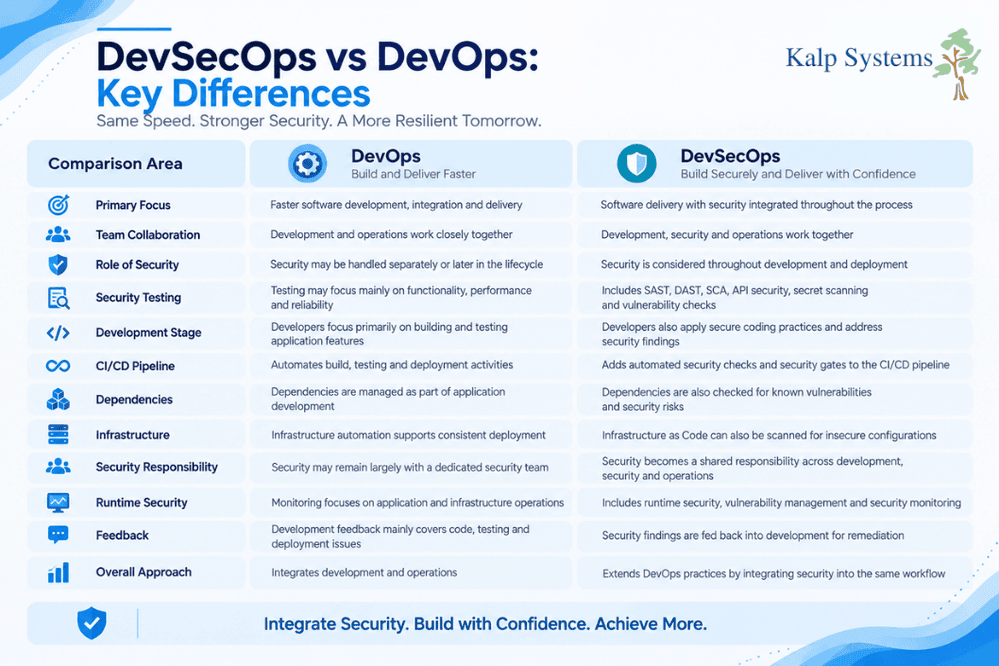
For example, a DevOps CI/CD pipeline may automatically build, test and deploy an application after the required development checks are completed. A DevSecOps pipeline can add security checks to the same process, such as source code analysis, dependency scanning, secret detection and infrastructure security checks.
The distinction is therefore mainly about where security sits within the development process. DevSecOps brings security activities into the same workflow used to develop, deliver and operate software, allowing security issues to be identified and addressed throughout the application lifecycle.
Benefits and Challenges of DevSecOps
DevSecOps can change how security fits into software development, but adopting it requires changes to existing development practices. The benefits become clearer when security checks are integrated into the work developers already do, while the challenges often relate to skills, tools and how teams manage security findings.
Key Benefits for Secure Software Development
Earlier identification of security issues:
Security testing during development can help identify vulnerabilities before code reaches production. Developers can address issues while they are still working on the relevant code, reducing the effort involved in fixing problems later.
Faster security feedback:
Automated checks can provide security findings as part of the development and CI/CD workflow. Developers can see problems earlier and investigate them without waiting for a separate security review.
More consistent security testing:
A DevSecOps approach allows repeatable security checks to be applied across builds and releases. This can include source code analysis, dependency checks, secret scanning, API testing and configuration validation.
Better visibility across the software lifecycle:
Security teams can gain visibility into risks across source code, dependencies, infrastructure, applications and runtime environments. This gives teams more information when deciding which issues need attention.
Support for security and compliance requirements:
Security controls can be incorporated into development workflows and monitored over time. This can make it easier to demonstrate that required security practices are being applied as applications change.
Common DevSecOps Adoption Challenges
Security skills within development teams:
Developers may need additional knowledge of secure coding, vulnerability management and security testing. Without the right guidance, automated security findings can be difficult to understand or prioritise.
Too many security tools and findings:
Adding several security tools can create a large number of alerts. Teams need to choose tools carefully and establish clear processes for reviewing and remediating findings.
Integrating security into existing workflows:
Adding security checks to an established CI/CD pipeline requires planning. Poorly configured checks can slow development or create unnecessary interruptions, particularly when teams are still adapting to the process.
Changing team practices:
DevSecOps requires developers, security and operations teams to work more closely on security issues. Clear responsibilities and communication are important for making this work consistently.
The practical goal is to introduce security controls at the points where they provide useful feedback, while keeping the development process manageable. This requires the right combination of tools, processes and security knowledge.
How to Implement DevSecOps Effectively
There is no single way to introduce DevSecOps. The approach depends on the application, development process, technology stack and security requirements. A team working with cloud infrastructure and microservices, for example, may need different security checks from a team maintaining a smaller web application.
A practical implementation starts by bringing security into the existing development process rather than creating a separate process around it.
Integrate Security into Development and CI/CD
Security requirements should be discussed before development begins. Threat modelling and architectural reviews can help identify risks early, while secure coding practices give developers a clear way to deal with common application vulnerabilities.
Security checks can then be added to the CI/CD pipeline as development progresses. Source code can be analysed with SAST, dependencies can be checked for known vulnerabilities, and secret scanning can identify credentials that have been accidentally added to a repository.
The same pipeline can also check infrastructure configurations and container images before they are deployed. This gives the development team an opportunity to deal with security issues while the related code or configuration is still being worked on.
Automate Testing and Continuous Monitoring
Automation is useful when security checks need to be repeated across frequent releases. Instead of relying on a manual review for every change, appropriate tests can run as part of the development and deployment process.
Different stages require different types of testing. DAST can be used against a running application; API security testing can examine exposed interfaces, and dependency or container scanning can identify vulnerabilities in supporting components.
The work does not stop when the application reaches production. Vulnerabilities can be disclosed after deployment, and changes to the application or its environment can introduce new risks. Runtime security, logging, monitoring and vulnerability management help teams keep track of these changes.
Measure and Improve Security
DevSecOps should also give teams a way to see whether their security process is actually improving. Useful measures can include how quickly vulnerabilities are fixed, which types of issues appear repeatedly, and how much of the development pipeline is covered by automated security checks.
These findings can point to changes that need to be made in the development process. If the same security weakness keeps appearing, the answer may involve better secure coding guidance, an earlier security check or changes to the development workflow.
Over time, the aim is to make security checks a normal part of building and maintaining software. The process can then be reviewed and adjusted as the application, infrastructure and security risks change.
DevSecOps Trends in 2026
DevSecOps practices are changing as development environments become more dependent on automation, APIs and cloud infrastructure. In 2026, security teams are looking at ways to use these technologies without losing visibility into the risks they introduce.
AI-Powered Security Testing
AI is being used in security testing to help analyse code, identify potential vulnerabilities and assist with security reviews. It can also help teams work through large numbers of findings and identify areas that may need further investigation.
For development teams, the useful part is the additional analysis it can provide during the development process. Human review is still important, particularly when a finding involves application logic or a decision about how a vulnerability should be fixed.
API-First Security and Compliance as Code
APIs have become a key part of modern applications, connecting internal services, cloud platforms and external systems. As applications rely more heavily on APIs, security testing needs to cover authentication, authorisation, input handling and data exposure.
Compliance as code is another area gaining attention. Security and compliance requirements can be represented as rules and checked automatically during development or deployment. This can help teams identify configuration or control gaps without waiting for a periodic review.
Together, these approaches extend DevSecOps beyond source code. Security checks can cover the APIs, infrastructure and configurations that support the application, while automated controls can be applied repeatedly as the environment changes.
How Kalp Systems Supports DevSecOps Implementation
DevSecOps requires security to be considered across development, testing, deployment and ongoing application management. Kalp Systems can support teams with security assessments and practices that fit into these stages.
Our services can include:
- Secure SDLC and Threat Modelling: Reviewing application architecture and development processes to identify security risks early.
- Application Security Testing: Assessing applications for vulnerabilities through methods such as static and dynamic security testing.
- API and Cloud Security Assessments: Reviewing APIs, cloud environments and related configurations for security weaknesses.
- Vulnerability Assessment and Management: Identifying vulnerabilities and helping teams prioritise issues that require remediation.
- Security Monitoring: Supporting ongoing visibility into application and infrastructure security after deployment.
- Security Governance and Compliance: Helping align security practices with applicable requirements and internal security policies.
By bringing these activities into the development lifecycle, Kalp Systems helps teams address application security during development and continue managing security risks after deployment.
Conclusion
DevSecOps brings security into the software development process from planning and coding through deployment and ongoing monitoring. Security testing can be added to CI/CD pipelines; dependencies and infrastructure can be checked during development, and runtime monitoring can help identify issues after an application is deployed.
The approach is particularly useful for applications that rely on cloud services, APIs, open-source components and frequent releases. As these environments change, security also needs to be reviewed continuously.
For development teams, the focus is on making security part of the work already involved in building and delivering software. With the right testing, automation, monitoring and collaboration between development, security and operations teams, security issues can be addressed throughout the application lifecycle.
Frequently Asked Questions
What is DevSecOps?
DevSecOps stands for Development, Security and Operations. Security is considered during the development of an application, with practices such as secure coding, code scanning, dependency checks and security testing. These checks can continue through deployment and into the operational stage, where teams monitor the application and deal with new vulnerabilities.
How is DevSecOps Different from DevOps?
DevOps brings development and operations together around software delivery. DevSecOps includes security in that same process. A development team may already have a CI/CD pipeline for building and testing code, for example. Security checks such as SAST, SCA or secret scanning can be added to the pipeline rather than waiting for a separate review at the end.
What are the Main Benefits of DevSecOps?
Security problems can be dealt with closer to where they are introduced. A vulnerable dependency can be replaced during development, and a coding issue can be fixed before the application reaches later testing stages. Automated checks also take some of the repetitive work out of security testing, particularly when changes are being released frequently.
What Tools are Commonly Used in DevSecOps?
Different parts of the development process call for different tools. SAST checks source code, SCA examines software dependencies, and DAST tests a running application. Depending on the setup, teams may also use secret scanning, API security testing, container scanning and Infrastructure as Code security tools. Jenkins, GitHub Actions and GitLab are commonly used to connect security checks with CI/CD workflows.
How does DevSecOps Improve Application Security?
An application can have security issues in several places, so testing only the source code leaves gaps. DevSecOps can bring together code analysis, dependency checks, API testing, configuration checks and runtime monitoring. A problem found at any of these stages can be investigated and sent back into the development process for fixing.