HomeBlogGovernance and ComplianceAligning Cyber Security Strategy with Business Objectives
Aligning Cyber Security Strategy with Business Objectives

Why Cyber Security Strategy Must Align with Business Objectives
A cybersecurity strategy has to reflect what the business is actually trying to achieve. If a company is expanding into new markets, moving workloads to the cloud, launching digital services, or handling more customer data, each decision changes its security requirements.
This is why security planning should start with business priorities. The security team needs to know which systems keep operations running, which data is sensitive, and which business activities would cause the greatest disruption if they were compromised. That context helps the business decide where stronger controls are needed and where security measures may not provide enough value to justify their cost.
Good alignment also gives senior leadership a clearer way to discuss cybersecurity. Instead of looking at security as a collection of technical controls, leaders can connect security decisions with revenue protection, regulatory responsibilities, operational continuity, customer trust, and business growth.
Cyber Risk is Business Risk
The effect of a cyber incident can quickly move beyond the IT team. A ransomware attack that takes critical systems offline, for example, can delay operations, affect customers, create recovery costs, and put pressure on other parts of the business. A data breach can bring additional privacy, legal, and regulatory concerns.
The level of risk also depends on what the business is doing. A company launching a customer-facing application may need to give greater attention to application security and access controls. A business handling large volumes of personal information may need stronger data protection and privacy measures.
Looking at cyber risk in this context helps security teams set priorities around business impact. It also reduces the chance of spending heavily on controls that address lower-priority risks while critical areas remain exposed.
Regulatory and Governance Expectations
Regulatory requirements have also made cybersecurity a leadership concern. Frameworks and standards such as ISO/IEC 27001 and SOC 2, along with sector-specific requirements from bodies such as RBI and SEBI, place greater emphasis on security controls, accountability, and risk management. India’s Digital Personal Data Protection Act also brings data protection responsibilities into business planning.
The practical challenge is connecting these requirements with the way the business operates. Compliance activities should have clear ownership, defined processes, and evidence that controls are being followed. When these requirements are considered while the security strategy is being developed, compliance becomes part of the broader risk management process rather than a separate exercise.
Understanding Business Objectives Before Defining Cyber Strategy
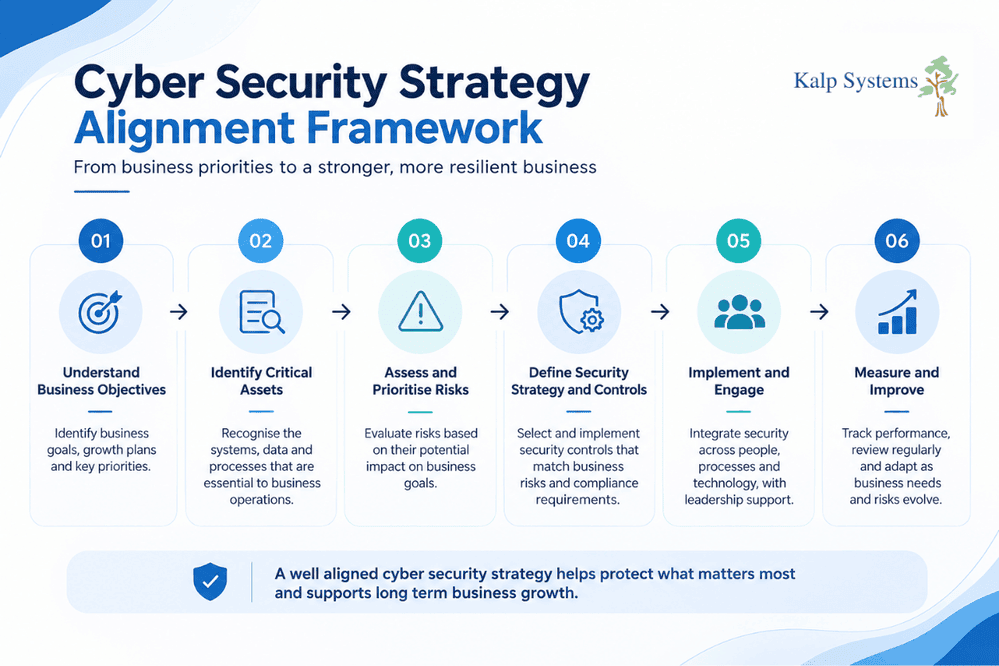
A cybersecurity strategy can only be effective when it is built on a clear understanding of business priorities. Without this foundation, security initiatives often become reactive, fragmented, or disconnected from real business needs.
By aligning security planning with business objectives, businesses can ensure that protection efforts focus on what truly matters to the enterprise.
Identify Core Business Goals and Critical Assets
Effective alignment begins with a clear understanding of business objectives. These may include growth into new markets, adoption of cloud or SaaS platforms, optimisation of operational costs, improvement in customer experience, or protection of intellectual property.
Cybersecurity teams must understand which assets, processes, and data are most critical to achieving these goals. Without this understanding, security investments can remain disconnected from business outcomes.
Map Business Processes to Cyber Risk
Each business objective carries a unique risk profile. For example, a company expanding its digital services faces increased exposure to application security risks, while a business handling sensitive customer data must prioritise data protection, privacy, and access controls.
Mapping business processes to cyber threats allows security teams to prioritise controls where they deliver maximum value. This risk-based approach ensures security measures are proportional to the potential impact on the business.
Prioritise Risks Based on Business Impact
Not every cyber risk has the same potential impact on business operations. The priority should depend on the systems, processes, and data involved, as well as the consequences of a security incident.
For example, a risk affecting a critical business application may need more immediate attention than an issue affecting a system with limited business importance. Looking at risk through business impact helps security teams decide where controls and resources are needed most.
Building a Risk Based Cyber Security Strategy
Security budgets and teams have limits, so every risk cannot receive the same level of attention. The starting point is to work out what could seriously interrupt the business, expose sensitive information, or create a regulatory problem. Those risks deserve attention before issues with little effect on day-to-day operations.
The same thinking applies when choosing security controls. What works for a financial services company may be unnecessary for a smaller SaaS business. Industry requirements, technology, customer data, critical systems, and the consequences of downtime all influence the security plan.
Define Risk Appetite and Security Priorities
Some levels of cyber risk exist in every business. Leadership has to decide what level it is prepared to accept and where the consequences are too serious to take that chance.
Consider a company preparing to launch a new digital service. Delaying the launch for every low-level security finding may make little business sense. A weakness that could expose customer data or provide access to a critical system is a different matter. Risk appetite gives teams a way to make that distinction instead of treating every finding as equally urgent.
Select Security Controls Based on Business Needs
Controls should follow the risks identified during the assessment. A business that relies heavily on cloud applications may put more attention into identity, access, configuration, and monitoring. Where sensitive customer information is involved, encryption, access restrictions, data handling practices, and recovery arrangements may carry greater weight.
ISO/IEC 27001, the NIST Cybersecurity Framework, and CIS Controls can provide structure for this work. They still need to be applied in the context of the company’s systems, responsibilities, and risk profiles.
Move Beyond Checklist Based Compliance
Passing an audit can show that certain requirements were met at a particular point in time. It does not tell the whole story about cyber risk.
A required control may exist on paper but work poorly in practice. A new cloud service might introduce an exposure that was never considered when a policy was written. Changes in suppliers, applications, employees, or business processes can create similar gaps.
Risk assessments therefore need to look at what is actually happening across the business. Compliance remains part of the picture, but security priorities should also reflect current threats, vulnerabilities, and the damage an incident could cause.
Integrating Cyber Security Across the Business
Cybersecurity becomes difficult to manage when it sits only with the IT or security team. A new supplier may introduce a third-party risk. HR may need to give a new employee access to business systems. A product team may launch an application that handles customer data. Each of these decisions can introduce a security concern, even though none of them starts as a security activity.
Security teams therefore need to work with the people responsible for these business functions. The aim is to understand where security requirements fit into existing processes and where a change in the business could introduce a new risk.
Board and Executive Involvement
Senior leaders need a clear view of the risks that could affect important business activities. Security discussions at this level can cover critical risks, major incidents, regulatory requirements, security investments, and areas where existing controls need attention.
The way this information is presented matters. A list of vulnerabilities may mean little to a board unless the business impact is clear. Reporting can instead show how a particular risk could affect an important system, customer service, regulatory requirements, or business operations.
Align Technology and Security Processes
Security technology needs to fit the way the business operates. A complex security platform may provide useful capabilities, but it can become difficult to manage if the team does not have the time, skills, or processes needed to use it properly.
Security also needs to be part of everyday business processes. Procurement should consider the security of third parties before contracts are signed. HR processes should include appropriate access changes when employees join or leave. Application teams should consider security during development and major changes. Incident response plans should also involve the teams responsible for keeping the affected business service running.
Build a Security Aware Culture
Employees make security-related decisions throughout the working day. They open emails, handle customer information, access business applications, share files, and work with external contacts. A mistake in any of these activities can create an opportunity for an attacker.
Security awareness training should therefore be connected to the situations employees are likely to encounter. Phishing examples, password and access practices, handling sensitive information, and incident reporting are more useful when people understand what they need to do in their actual roles.
Measuring Cyber Security Strategy Performance
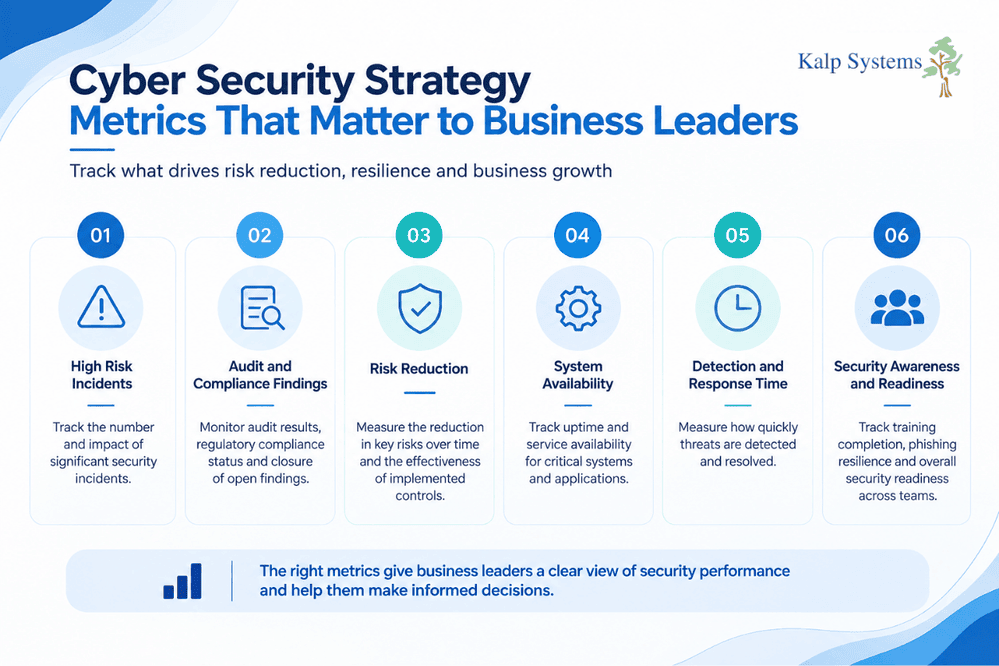
A cybersecurity strategy needs regular measurement to show whether it is reducing meaningful business risk. Technical activity alone does not give leadership a clear picture of security performance. The focus should be on whether critical risks are being reduced, important systems remain available, and the business can respond effectively when an incident occurs.
Use Business Relevant Security Metrics
Security teams can track metrics such as the number of high-risk incidents, audit findings closed, compliance readiness, system availability during attacks, and the time taken to detect and respond to incidents. These measures give leadership a clearer view of how security efforts affect business resilience.
The right metrics will depend on the company’s priorities and risk profile. A business focused on digital services may place greater attention on service availability and incident response, while a company handling sensitive customer data may give more attention to access controls, data protection, and compliance readiness.
Track Risk Reduction and Incident Response
Measuring the number of vulnerabilities or security alerts can show activity, but it does not necessarily show whether overall risk is decreasing. Security teams should also track whether high-priority risks have been addressed and whether critical business processes are better protected.
Incident response provides another useful measure. Tracking detection and response times can help identify weaknesses in monitoring, communication, decision-making, and recovery. Reviewing these results after an incident can also highlight where processes or controls need to be improved.
Continuously Review and Improve the Strategy
Business priorities change as companies introduce new technologies, enter new markets, change operating models, or handle different types of data. The cybersecurity strategy should be reviewed when these changes occur so that security priorities continue to reflect the business risk profile.
Threat intelligence, regulatory changes, security assessments, and lessons from previous incidents can all contribute to these reviews. Regular evaluation helps security teams adjust controls, priorities, and resources instead of relying on a strategy that no longer reflects current business needs.
Cyber Security Strategy Alignment Checklist
A practical review can help confirm whether cyber security priorities are connected to the wider needs of the business. Use the following checklist when developing or reviewing a cyber security strategy:
- Identify the company’s key business objectives and priorities.
- Identify critical systems, applications, data, and business processes.
- Map important business processes to relevant cyber risks.
- Assess risks based on their potential business impact.
- Define the organisation’s risk appetite and security priorities.
- Select security controls based on identified risks and business requirements.
- Include cyber security in business and technology planning.
- Involve the board and senior leadership in important security decisions.
- Integrate security into procurement, HR, legal, operations, and other relevant processes.
- Provide regular security awareness training for employees.
- Track business-relevant security metrics and risk reduction.
- Measure incident detection, response, and recovery performance.
- Review security controls after incidents, assessments, and major business changes.
- Update the strategy when business priorities, technologies, threats, or regulatory requirements change.
Conclusion
Cybersecurity decisions are closely tied to business decisions. A company entering a new market, moving workloads to the cloud, launching a digital service, or handling more customer data will face different security requirements. The security strategy needs to reflect those changes instead of remaining the same year after year.
That starts with knowing what the business needs to protect and which risks could cause the greatest disruption. From there, security teams can set priorities, choose appropriate controls, involve the right people, and measure whether those measures are actually reducing risk. Leadership also has an important role in making sure security remains part of wider business planning.
There will always be new risks, technologies, and regulatory requirements to consider. Regular reviews give the business an opportunity to adjust its security priorities when circumstances change. This keeps cybersecurity connected to the way the company operates and helps protect its data, systems, customers, and day-to-day operations.
Frequently Asked Questions
What is a Cyber Security Strategy?
A cyber security strategy is a plan that sets out how a company will protect its systems, data, applications, and other important digital assets. It covers areas such as risk management, security controls, access management, incident response, employee awareness, and compliance. The strategy should reflect the company’s actual business needs and the risks it faces.
Why should Cyber Security Strategy Align with Business Objectives?
Security decisions can affect business operations, costs, customer trust, compliance, and the ability to introduce new services. When the cyber security strategy is connected to business objectives, security teams can focus their resources on the systems, data, and processes that matter most to the company.
How do you Align Cyber Security with Business Goals?
Start by identifying the company’s main business goals and the systems, data, and processes that support them. Assess the risks associated with those areas, decide which risks require the most attention, and select controls accordingly. It is also important to involve business and security leaders in these decisions and review the strategy when business priorities change.
What are the Key Components of a Cyber Security Strategy?
The main components can include cyber risk assessment, security policies, governance, access controls, data protection, security monitoring, incident response, employee awareness, third party risk management, and compliance. The exact priorities will depend on the company’s size, industry, technology environment, and risk profile.
How can Businesses Measure Cyber Security Strategy Performance?
Businesses can look at measures such as high-risk incidents, unresolved security risks, audit findings, compliance readiness, system availability, and incident detection and response times. These measures provide a better view of security performance when they are considered alongside the business risks the strategy is intended to address.