
Overview
India’s digital ecosystem is increasingly dependent on cloud infrastructure, SaaS applications, managed services, APIs, analytics environments, and outsourced IT operations. From fintech and healthcare to enterprise software and online platforms, organisations today process large volumes of personal data across interconnected systems that often span multiple vendors, cloud regions, and third-party services.
As this ecosystem expands, the Digital Personal Data Protection Act, 2023 (DPDP Act) is becoming much more than a legal or policy discussion. For cloud providers, SaaS companies, and IT service organisations, the law directly affects how platforms are designed, how access is managed, how vendors are governed, and how customer data moves across systems.
Many organisations initially approach DPDP as a compliance exercise focused on privacy notices and consent banners. In practice, the impact is much broader. Modern cloud environments involve continuous movement of personal data between applications, support systems, analytics tools, APIs, cloud infrastructure, and remote operational teams. Once organisations begin mapping those data flows, they usually realise the challenge is not only compliance. The larger challenge is maintaining visibility and governance across rapidly expanding digital ecosystems.
Why the DPDP Act Matters for Cloud, SaaS, and IT Service Providers in India
Unlike industries where personal data only supports business operations, cloud and SaaS companies are fundamentally built around processing, storing, analysing, or transferring digital information. This makes DPDP far more operational for technology providers than for many traditional sectors.
A SaaS platform may collect user information during onboarding, process behavioural analytics in the background, rely on cloud infrastructure hosted in another country, and integrate with several external tools for customer support, CRM, payments, or monitoring. In many organisations, personal data travels through more systems than teams initially expected.
This is especially relevant for:
- Cloud infrastructure providers
- SaaS platforms
- IT outsourcing companies
- Managed service providers
- Analytics and AI companies
- Cybersecurity vendors
- Remote support providers
In many of these environments, organisations may function as both Data Fiduciaries and Data Processors depending on the service being delivered. A SaaS company collecting customer analytics may act as a Data Fiduciary, while the same organisation may process employee or operational data on behalf of enterprise clients as a processor.
That overlap often creates practical compliance complexity because obligations may differ across products, customer environments, and vendor ecosystems. For many technology companies, DPDP compliance becomes less about isolated legal requirements and more about building stronger governance across infrastructure, access management, vendors, and operational processes.
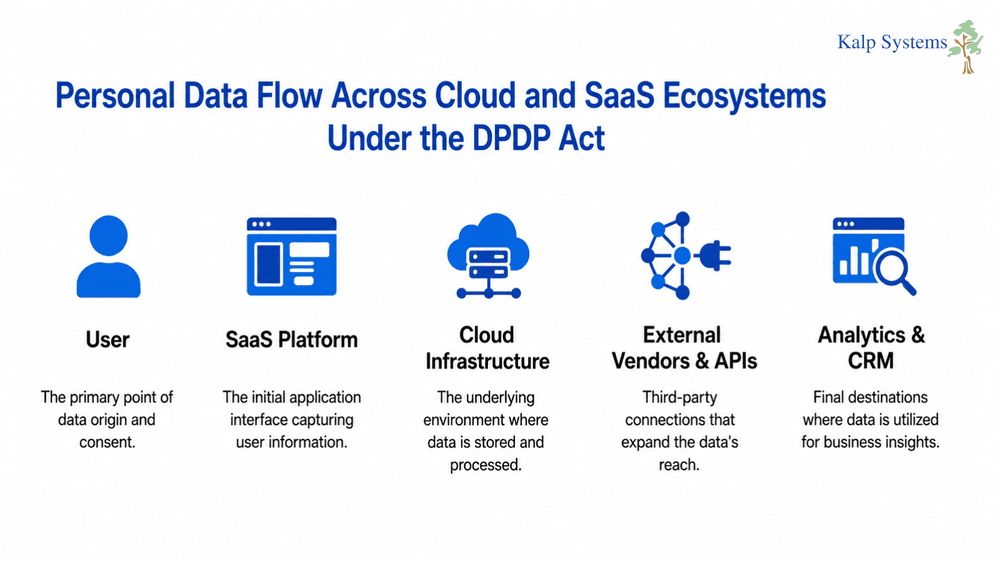
Key Operational Areas Where DPDP Creates the Biggest Business Impact
One of the biggest misconceptions around DPDP is that the law mainly affects documentation. In reality, cloud and SaaS providers usually experience the biggest impact in operational areas that were previously managed separately by different teams.
For example, customer onboarding may be managed by product teams, cloud access by infrastructure teams, retention settings by operations, and vendor integrations by development teams. DPDP forces organisations to connect these functions more closely because personal data often moves across all of them simultaneously.
Several operational areas are now receiving more attention under DPDP.
- Consent and onboarding workflows:
Many SaaS businesses are reviewing how consent is collected during signup, how notices are displayed, and whether users clearly understand how their data will be processed across integrated services and cloud environments.
- Vendor and processor governance:
Modern cloud ecosystems rely heavily on third-party providers, analytics platforms, support tools, and infrastructure vendors. Organisations are now expected to maintain better visibility into how those vendors access, store, or process personal data.
- Data retention and deletion practices:
In many environments, customer data continues to remain inside backups, logs, inactive systems, or testing environments long after it is no longer required. DPDP is increasing the focus on lifecycle management and deletion of governance.
- Incident response and monitoring:
As infrastructure becomes more distributed, organisations are also reviewing how quickly incidents can be identified, escalated, and investigated across cloud systems and vendor environments.
In many cases, organisations only begin discovering governance gaps after they review how personal data actually moves between systems, APIs, vendors, and operational workflows.
Managing personal data across cloud environments
Most cloud environments grow one integration at a time. A CRM is connected to the website; an analytics platform is added later, customer support moves to another application, and backups are configured in a different location. Each decision makes sense on its own. After a few years, however, personal data may be scattered across far more systems than anyone expected.
That becomes obvious when someone asks a simple question such as, “Where is this customer’s information stored?” The answer is rarely straightforward. One copy may sit in the production database, another in a backup, another inside a reporting tool, while support records exist on a separate platform. Development teams may also have masked datasets in testing environments. None of these systems were created to complicate compliance, yet together they make personal data much harder to track.
For organisations working towards DPDP compliance, mapping these data flows is often one of the most useful exercises they can undertake. It reveals where information is collected, where it travels, who has access to it, and whether it remains in systems long after its original purpose has ended. Businesses are often surprised by the number of duplicate records and forgotten repositories they uncover during this process.
Having that visibility makes day-to-day operations easier as well. Customer requests can be handled with greater confidence, access reviews become more meaningful, and security teams spend less time searching for information during investigations or incident response.
Balancing compliance with business operations
Every cloud business faces the same pressure. Customers expect new features, faster releases, and reliable services, while internal teams are expected to keep systems secure and compliant at the same time. If privacy reviews only happen after a product has been developed or a cloud environment has already been deployed, they usually slow projects down and create unnecessary rework.
Many organisations are finding that a small change in process makes a noticeable difference. Instead of treating compliance as the final checkpoint, they introduce privacy discussions much earlier. Product managers explain what information will be collected, infrastructure teams outline where it will be stored, developers identify how it moves between services, and security teams review whether the planned controls are appropriate. Questions that might have delayed a project later are resolved while changes are still easy to make.
There is also a practical business benefit. Teams that understand their data flows and operational responsibilities spend less time responding to unexpected compliance issues. They are better prepared when customers ask about data handling practices, when vendors are assessed, or when internal audits take place. Over time, privacy becomes another part of building and operating cloud services rather than a separate activity that competes with everyday business priorities.
Identity and Access Management Requirements Under the DPDP Act
Identity and access management (IAM) is becoming one of the most important operational areas for DPDP compliance, especially in cloud and SaaS environments where multiple users, administrators, vendors, and support teams may interact with personal data every day.
Many organisations already invest heavily in perimeter security controls, but DPDP also increases the importance of controlling internal access and monitoring how personal data is handled across distributed systems.
This becomes particularly important in environments involving remote administrative access, shared infrastructure, DevOps pipelines, support vendors, and privileged accounts.
Several IAM areas are now receiving more attention:
- Role-based access controls:
Organisations are increasingly reviewing whether employees, vendors, or contractors have access only to the systems and customer information required for their responsibilities. In many environments, excessive permissions accumulate over time without proper review.
- Multi-factor authentication and privileged access monitoring:
Cloud and SaaS environments often involve highly privileged administrator accounts. Businesses are now strengthening controls around administrative access because compromised privileged accounts can expose large amounts of personal data very quickly.
- Identity lifecycle management:
Many organisations are also reviewing how access is granted, modified, and revoked when employees change roles; vendors leave projects, or support teams no longer require system access.
Weak IAM governance may not immediately appear as a compliance issue, but over time, poor visibility into internal access can create both operational and security risks.
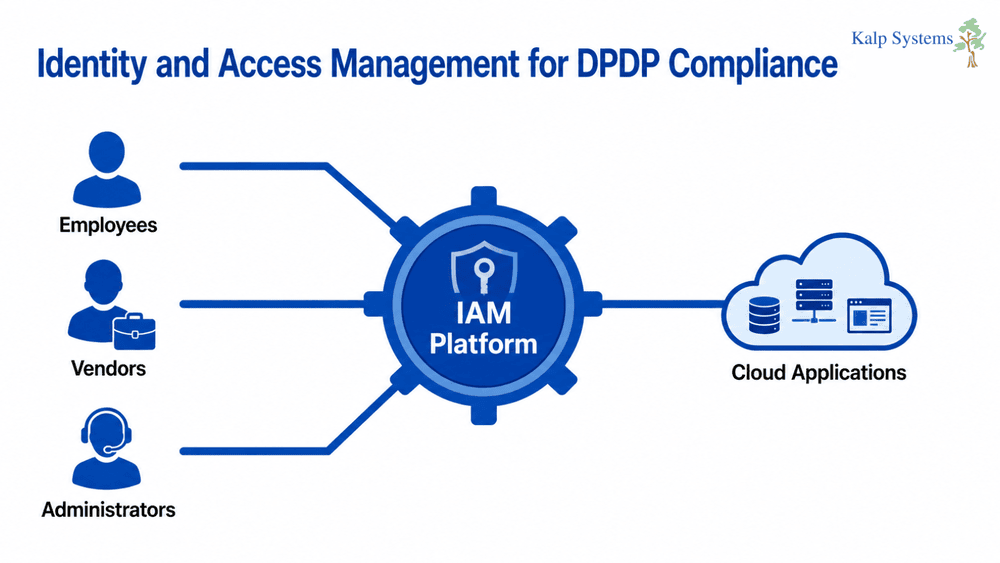
Strengthening access controls for cloud environments
Access to cloud systems rarely stays the same for long. New employees join, projects expand, contractors are brought in for short assignments, and additional applications need to communicate with one another. As these changes happen, permissions also grow. Unless someone is reviewing them regularly, people often end up with access they no longer need.
This usually isn’t the result of poor security practices. It happens because business priorities move faster than access reviews. A developer who needed temporary permissions during a migration may still have them months later. A support engineer who changed roles might continue accessing customer records simply because nobody removed the original privileges.
Keeping access aligned with current responsibilities is one of the simplest ways to reduce unnecessary exposure of personal data. Many organisations now schedule periodic reviews of user accounts across cloud platforms, ensuring permissions reflect present day responsibilities rather than historical ones. It also gives security teams a clearer picture of who can access sensitive information and whether that access is still justified.
Managing privileged user access and authentication
Every cloud environment has a small group of accounts with the ability to make significant changes. These are administrator accounts used to manage infrastructure, databases, identity services, or security configurations. If one of them is compromised, the impact can spread quickly because privileged users often have broad access across multiple systems.
One situation appears more often than expected. An administrator account is created for a specific implementation, migration, or troubleshooting exercise. The project finishes, but the account remains active because removing it is nobody’s immediate priority. Over time, several similar accounts accumulate, each increasing the organisation’s attack surface without adding any operational value.
Regular reviews of privileged accounts help prevent this from becoming a long-term issue. Organisations are also strengthening authentication by using multi-factor authentication, limiting shared administrative accounts, and recording privileged activities through audit logs. These measures make unusual behaviour easier to detect while giving security teams better visibility into how sensitive systems are being accessed.
Vendor Accountability and Data Processor Responsibilities Under DPDP
Cloud and SaaS ecosystems are heavily dependent on external vendors. Analytics providers, CRM platforms, support tools, cloud infrastructure services, communication APIs, and monitoring solutions often process customer information behind the scenes.
Because of this, organisations may unknowingly distribute personal data across multiple external systems without maintaining complete visibility into how that information is handled.
Under DPDP, organisations cannot completely transfer accountability simply because another vendor processes data on their behalf. This is why vendor governance and processor oversight are becoming much more important operationally.
Many organisations are now reviewing several areas more carefully.
- Security and access expectations:
Businesses increasingly want to understand how vendors secure customer data, how access is controlled internally, and whether sensitive information is unnecessarily exposed across support or operational teams.
- Incident reporting responsibilities:
Organisations are also reviewing how quickly vendors can report security incidents, operational disruptions, or unauthorised access events that may affect personal data.
- Data deletion and retention obligations:
In many cloud ecosystems, customer information may continue existing inside backups, archived systems, or third-party tools even after services are discontinued. Because of this, organisations are strengthening contractual clarity around deletion and retention practices.
This is also why processor agreements are becoming more operationally important. Contracts increasingly define security expectations, breach of reporting timelines, access restrictions, audit visibility, and subprocess or responsibilities.
In practice, many compliance risks emerge not from the primary application itself, but from fragmented third-party ecosystems involving multiple integrations and vendors.
Managing third-party vendors and service providers
Very few cloud or SaaS businesses deliver services without outside support. Infrastructure providers, payment gateways, communication platforms, customer support tools, monitoring services, and analytics platforms all play a role in day-to-day operations. Each relationship can also introduce another location where personal data is processed.
The difficulty is that vendor ecosystems rarely remain static. New integrations are added to support business growth; departments adopt specialised software, and existing suppliers expand the services they provide. Without regular oversight, organisations can gradually lose sight of where customer information is flowing and which external parties have access to it.
That is why vendor management has become an ongoing activity rather than a one-time assessment. Periodic security reviews, discussions around operational changes, and a clear understanding of how personal data is handled help organisations identify issues before they become larger compliance concerns. It also creates stronger working relationships with vendors, making it easier to respond if an incident affects shared systems or customer information.
Strengthening contractual and compliance obligations
Contracts often receive attention during procurement and then remain untouched until the next renewal cycle. Meanwhile, services evolve. Infrastructure changes, new features are introduced, subcontractors become involved, and the way personal data is processed may look very different from what was originally agreed.
Reviewing contracts periodically helps ensure they continue to reflect the actual relationship between both organisations. Responsibilities for protecting personal data, reporting security incidents, retaining information, and deleting records should remain clear as services develop over time. Ambiguity in these areas often becomes a problem only after an incident has occurred.
Many organisations are also treating vendor agreements as part of their wider governance framework instead of separate legal documents. Security teams, compliance professionals, procurement, and business owners all have a role in confirming that contractual commitments continue to support operational practices. When these teams work together, contractual obligations become much easier to translate into day-to-day processes rather than remaining words on paper.
Cross-Border Data Transfer Challenges for Cloud and SaaS Providers
Cloud and SaaS providers frequently rely on globally distributed infrastructure involving international storage, overseas support teams, backup systems, and remote operational access. This creates direct overlap with DPDP’s cross-border transfer provisions.
Under the DPDP Act, personal data transfers outside India are generally allowed unless the Government of India restricts specific countries or territories. Compared to some global privacy frameworks, this model provides more operational flexibility. At the same time, organisations are still expected to remain accountable for how personal data is protected after transfer.
This affects several operational decisions including:
- Regional hosting strategies
- Disaster recovery infrastructure
- Vendor selection
- Cross-region administrative access
- Backup storage locations
- Global support operations
Many organisations are now spending more time understanding where personal data is stored, which vendors can access, and how data flows across cloud environments internally.
Managing international cloud infrastructure
For many cloud and SaaS providers, international infrastructure is part of normal business operations. A customer in India may use an application hosted in one region, backed up in another, while technical support is provided by a team working from a different country. These arrangements improve availability and resilience, but they also make it harder to understand where personal data is stored at any given time.
The challenge is not simply knowing which cloud provider is being used. Organisations also need visibility into how data moves between regions, whether overseas teams can access customer information, and which services automatically replicate data for backup or disaster recovery. These activities often happen in the background, making them easy to overlook during routine operations.
Taking time to document international data flows gives organisations a clearer picture of their cloud environment. It also helps when infrastructure changes, new services are introduced, or customers ask where their personal information is being processed. Good visibility reduces uncertainty and supports better decision making as cloud environments continue to grow.
Meeting cross border data transfer requirements
Cross border data transfers are common in cloud environments, even when organisations do not actively plan for them. A software update may introduce a new service hosted outside India, an analytics platform may process information in another region, or disaster recovery systems may replicate customer data automatically. Unless these movements are understood, businesses may not realise how frequently personal data crosses national borders.
Rather than relying on assumptions, organisations benefit from identifying which business processes involve international data transfers and why those transfers are necessary. This includes understanding the role of cloud providers, third party vendors, support teams, and integrated services that interact with personal information during normal operations.
As cloud environments evolve, these reviews should become part of regular governance rather than a one-off exercise. New integrations, infrastructure changes, and vendor relationships can all affect how personal data moves across borders. Maintaining an up-to-date view of these activities helps organisations respond more confidently to regulatory expectations and customer enquiries.
Building a Strong Data Governance Framework for Cloud and SaaS Companies
One of the most difficult aspects of DPDP compliance is maintaining visibility across increasingly distributed cloud environments.
Modern architectures involve APIs, microservices, analytics tools, integrations, backups, logs, and automation systems constantly exchanging information behind the scenes. Over time, organisations may lose visibility into where personal data exists, who can access it, and how long it is retained.
Several governance issues are becoming increasingly common.
- Shadow IT and unmanaged applications:
Teams sometimes adopt external tools or services without central governance visibility. Over time, this creates additional risk because personal data may flow into platforms that were never formally reviewed.
- Inconsistent retention and deletion practices:
Many organisations discover that customer information continues existing across backups, logs, inactive environments, or archived systems long after operational use has ended.
- Fragmented monitoring visibility:
Different cloud systems, vendors, and monitoring platforms may generate separate logs and alerts, making incident visibility more difficult across large environments.
Because of this, many organisations are now investing more heavily in centralised monitoring, data flow mapping, secure API governance, automated retention controls, and continuous compliance visibility.
In many cases, governance gaps only become visible after organisations conduct detailed reviews of how personal data moves across cloud systems and third-party integrations.
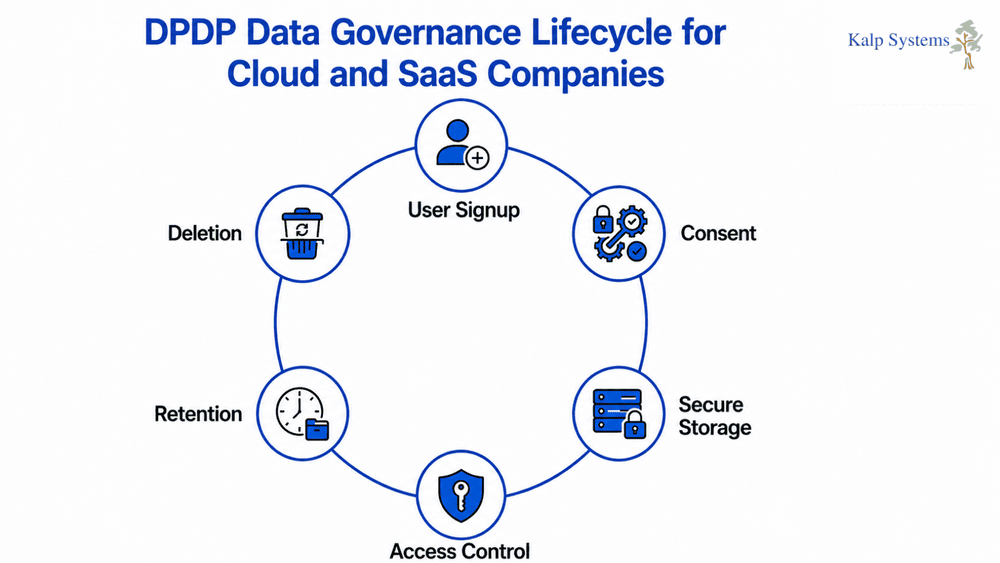
Data classification, retention, and lifecycle management
Many organisations focus on protecting personal data while it is actively being used, but far less attention is given to what happens afterwards. Information often remains in archived systems, old project folders, backups, testing environments, or inactive applications simply because nobody has reviewed whether it still serves a business purpose.
This creates two challenges. The first is operational. Storing unnecessary information makes it harder to locate the records that teams genuinely need. The second is compliance. The more copies of personal data that exist across different systems, the more difficult it becomes to manage access, respond to customer requests, or demonstrate effective governance.
A practical starting point is to understand what types of personal data the organisation holds and why each category is required. Once that picture is clear, retention periods and deletion practices become much easier to define. Regular housekeeping may not attract much attention, but it often removes risks that have quietly accumulated over several years.
Improving visibility and accountability across cloud environments
Cloud platforms generate enormous amounts of operational data. Access logs, security alerts, configuration changes, API activity, and user events all provide valuable insight into how systems are being used. The difficulty is that this information is usually spread across multiple tools, making it difficult to see the complete picture.
When an incident occurs, teams often spend valuable time bringing together information from different dashboards before they can understand what happened. The same problem appears during compliance reviews, where evidence may need to be collected from several cloud services, vendors, and internal systems.
Organisations are increasingly addressing this by improving central visibility rather than adding more monitoring tools. Bringing security events, access records, and operational logs together allows teams to investigate issues more efficiently and demonstrate greater accountability for how personal data is managed. As cloud environments become more complex, having reliable visibility across systems is proving just as important as the security controls themselves.
How DPDP Influences SaaS Product Design and Privacy by Design Principles
DPDP is also influencing how SaaS products are designed and managed. Privacy and governance expectations are gradually becoming part of the product experience itself rather than separate legal activities handled outside the application.
This affects several areas, including user onboarding, consent collection, retention settings, account deletion workflows, privacy notices, and customer access controls.
Many SaaS providers are now adopting privacy by design approaches that support:
- Clear consent mechanisms
- User data correction requests
- Controlled retention settings
- Secure default configurations
- Simplified deletion workflows
- Transparent processing notices
For SaaS businesses competing in enterprise environments, these changes are no longer compliance-driven. Customers increasingly evaluate privacy governance as part of vendor assessments, procurement reviews, and long-term trust decisions.
Embedding privacy into application development
Privacy decisions often begin long before an application goes live. They influence what information is collected during registration, how long records remain in the system, who can access customer data, and what happens when an account is deleted. If these questions are only discussed after development is complete, making changes becomes far more difficult.
Development teams are increasingly considering privacy requirements while features are still being designed. For example, they may question whether every data field on a registration form is genuinely required or whether a particular feature can function without collecting additional personal information. Small decisions made at this stage can reduce the amount of data flowing through the application and simplify compliance later.
This approach also supports long-term product development. As applications evolve, privacy becomes another design consideration alongside performance, usability, and security. Teams are then able to introduce new functionality without repeatedly revisiting the same governance issues.
Supporting consent management and user rights
Collecting consent is only one part of the process. Organisations also need confidence that they can demonstrate when consent was obtained, what information was shared with the individual at that time, and whether changes to privacy practices have been communicated appropriately.
As services expand, this becomes harder to manage. Customers may interact through websites, mobile applications, customer portals, or support channels, with each touchpoint collecting or using personal data in different ways. Keeping these activities consistent requires more than a privacy notice published on the website.
Businesses also need practical processes for handling requests from individuals. Whether someone asks to access their personal data, correct inaccurate information, or delete an account, responding efficiently depends on understanding where that information exists across the organisation. The more organised those processes are, the easier it becomes to meet both customer expectations and compliance obligations.
Common DPDP Compliance Gaps Cloud and SaaS Organisations Should Avoid
Many cloud and SaaS organisations already have strong infrastructure and security tooling, but still struggle with governance consistency and operational visibility.
Some of the most common gaps include:
- Assuming cloud providers handle all compliance responsibilities
- Weak visibility into vendor ecosystems
- Over-collection of personal data
- Poor IAM governance
- Weak monitoring of third-party integrations
- Lack of visibility into cross-system data flows
- Limited incident response readiness
In rapidly growing cloud ecosystems, governance challenges often increase much faster than organisations expect, especially when APIs, vendors, remote operations, and distributed infrastructure become deeply interconnected.
Operational and technical gaps
Many compliance challenges develop gradually rather than appearing after a single event. A cloud platform is integrated with another service; a new vendor is onboarded, or an application is updated to support additional business requirements. Each change seems routine, but together they can create gaps that nobody intended.
Access permissions that are never reviewed, outdated cloud configurations, undocumented APIs, or inactive user accounts are all examples of issues that become visible only when someone takes a closer look. They may not interrupt daily operations, yet they quietly increase operational and security risk over time.
Periodic reviews help bring these issues to the surface before they become larger problems. Looking beyond individual systems and examining how cloud infrastructure, applications, vendors, and operational processes work together often reveals opportunities to strengthen both security and governance.
Governance and documentation challenges
Technology changes quickly, but documentation rarely keeps pace. New cloud services are introduced, existing platforms are upgraded, and operational responsibilities shift between teams. Unless governance documents are updated alongside those changes, they soon stop reflecting how the environment actually operates.
This can create confusion during audits, customer assessments, or internal reviews. Teams may understand their day to day responsibilities, yet struggle to demonstrate how personal data is managed because policies, data flow diagrams, or vendor records have not been maintained.
Good governance depends on more than written policies. Organisations also need accurate records of data processing activities, vendor relationships, access reviews, retention practices, and security decisions. Keeping this information current provides a clearer picture of how personal data is managed and makes future compliance activities considerably easier.
A Practical DPDP Compliance Checklist for Cloud, SaaS, and IT Service Providers
Every organisation reaches DPDP compliance differently. The controls that matter for a SaaS platform may not look the same as those needed by a managed service provider or a cloud hosting company. Even so, there are a few operational areas worth revisiting on a regular basis. Small gaps often develop as cloud environments grow, and they are much easier to address during routine reviews than after an audit or security incident.
Technical controls and security measures
Before investing in new security tools, it helps to confirm that the basics are working as intended. Many organisations already have the right technologies in place, but access permissions, cloud configurations, or monitoring practices have gradually drifted away from their original design.
During technical reviews, organisations should look at questions such as:
- Do we know every cloud service and application where personal data is stored or processed?
- Are user permissions still appropriate, particularly for administrators, contractors, and temporary accounts?
- Is multi-factor authentication enforced for privileged users?
- Can we identify who accessed sensitive information if an investigation becomes necessary?
- Are APIs and third-party integrations exchanging more personal data than they actually need?
- Do backup copies follow the same security standards as production systems?
- Are vulnerability assessments, patching, and configuration reviews happening as planned, or only when an issue is discovered?
Answering these questions regularly provides a far better indication of operational maturity than relying on a checklist completed once a year.
Governance and ongoing compliance activities
Technology is only one part of the picture. Governance tends to weaken gradually as new suppliers are introduced, business processes change, and documentation falls behind the environment it is supposed to describe.
A useful review usually starts with a few practical questions.
- Have we documented how personal data moves through our cloud environment since the last major system changes?
- Have any new vendors, cloud services, or integrations been introduced that process customer information?
- Do our contracts still reflect how those vendors handle personal data today?
- Are retention periods being followed, or is information accumulating in archives, backups, and inactive systems?
- Would every team know what to do if a personal data incident occurred tomorrow?
- Can we demonstrate the decisions, reviews, and records that support our compliance activities if a customer or regulator asks?
These conversations often reveal issues that automated tools cannot. They also encourage security, legal, compliance, and operational teams to look at the same environment from different perspectives, making governance far more effective than treating DPDP as a periodic documentation exercise.
Conclusion
The DPDP Act significantly changes how cloud providers, SaaS companies, and IT service organisations approach data governance in India.
The impact extends far beyond legal documentation. It affects operational visibility, IAM governance, vendor accountability, infrastructure design, cloud architecture, and customer trust expectations.
For many organisations, the real challenge is not understanding the law itself. The larger challenge is maintaining visibility and control across increasingly interconnected cloud ecosystems involving vendors, APIs, analytics platforms, support tools, and distributed operational teams.
As businesses continue expanding through cloud infrastructure, AI-driven services, remote operations, and global delivery models, organisations that strengthen governance, monitoring, and access control practices early will be in a much stronger position to manage both compliance expectations and long-term trust.
Frequently Asked Questions
Does DPDP apply to cloud and SaaS companies outside India?
Yes, it can. If a cloud or SaaS company handles personal data related to users in India while offering services here, DPDP obligations may still apply even if the company operates from another country. This is why many global platforms are now reviewing their India specific privacy and data handling practices more closely.
Why is vendor management important under DPDP for cloud and SaaS companies?
Most cloud and SaaS businesses rely on multiple third-party vendors for hosting, analytics, support, and integrations. If personal data moves through those vendors, organisations are still expected to maintain proper oversight and security. In many cases, compliance gaps appear through external vendors rather than the main platform itself.
What is one of the biggest DPDP challenges for cloud and SaaS providers?
One major challenge is maintaining visibility across complex cloud environments where personal data moves between systems, APIs, vendors, and operational teams. As infrastructure grows, organisations often realise that tracking data flows and access permissions becomes much harder than expected.