HomeBlogCloud SecurityCloud Compliance Challenges for Indian Enterprises
Cloud Compliance Challenges for Indian Enterprises

Why Cloud Compliance is more Complex than Traditional IT Compliance
Traditional IT compliance was largely built around systems that were physically located within the enterprise. Data flows were easier to trace, infrastructure changed at a slower pace, and security controls could be reviewed through scheduled assessments.
Cloud environments introduce a different set of conditions. Resources can be created, changed, and removed quickly. Applications may depend on APIs, managed services, serverless components, and third-party platforms, with each introducing its own compliance considerations.
The shared responsibility model adds another layer to the picture. The cloud provider is responsible for securing the underlying infrastructure, while the customer remains responsible for areas such as data, identities, applications, and cloud configurations. If these responsibilities are poorly understood, important controls can be missed.
Cloud compliance therefore has to account for changes across the environment as they happen. A new service, altered configuration, or third-party integration can affect how data is handled and how security controls are applied. Periodic audits alone may not provide enough visibility to identify these changes in time.
India's Regulatory Landscape for Cloud Compliance
Cloud compliance in India is shaped by requirements that vary according to the type of data, industry, and services being used. An enterprise may need to consider privacy requirements alongside sector-specific rules and obligations that apply when data is stored or processed through cloud platforms.
Digital Personal Data Protection Act and Cloud Compliance
The Digital Personal Data Protection Act introduces requirements around the handling and protection of personal data. For cloud environments, this means understanding what personal data is being processed, where it is stored, how it moves between services, and which safeguards are in place.
Cloud providers can support these controls through their services and security features, but the customer still needs to understand how those capabilities are configured and used. Data handling practices should also account for requirements related to security safeguards, breach response, and the rights of data principals.
Sector Specific Compliance Requirements
Cloud compliance requirements can differ significantly between sectors. Financial services may need to consider RBI requirements covering areas such as outsourcing, data handling, and third-party risk. Healthcare environments have their own requirements for protecting sensitive health information, while telecom and critical infrastructure can face additional security and audit expectations.
When these workloads move to the cloud, the relevant controls need to be reflected in the architecture, access policies, monitoring processes, and audit records.
Data Localisation and Cross-Border Data Transfers
Data residency becomes an important consideration when cloud services operate across multiple regions. Enterprises need visibility into where data is stored and processed, particularly when regulatory or contractual requirements specify where certain information can be held.
Cross-border data transfers can add another layer of complexity when data moves between India and other jurisdictions. Cloud architecture, vendor agreements, and data handling practices should therefore be reviewed together to identify potential compliance gaps.
Key Cloud Compliance Challenges for Indian Enterprises
Cloud compliance becomes harder when an enterprise has limited visibility into its cloud environment. Data may sit across different services, teams may manage separate workloads, and access can change as applications develop. This makes it harder to answer basic compliance questions and keep controls aligned with actual cloud usage.
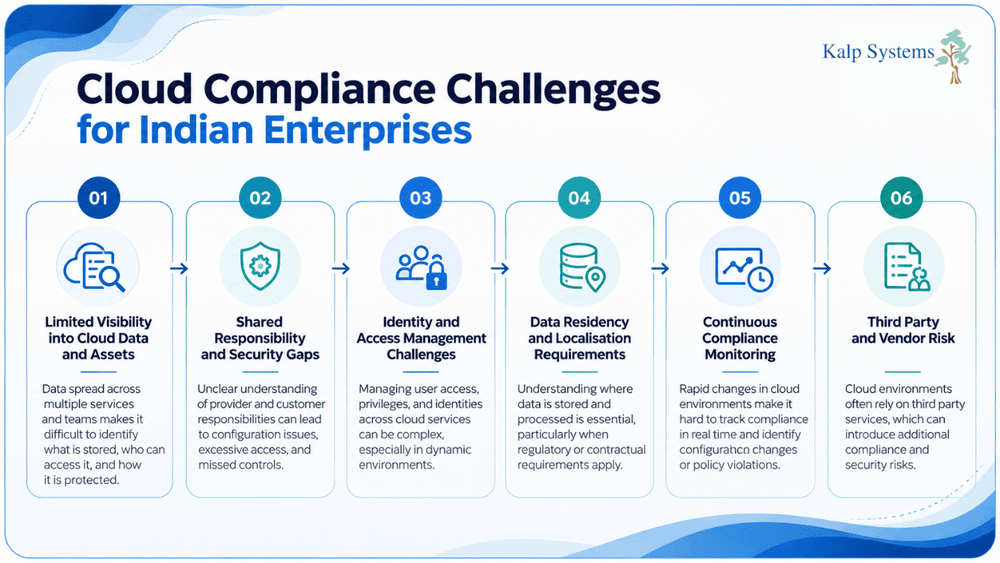
Limited Visibility into Cloud Data and Assets
Knowing where sensitive data is stored sounds straightforward until cloud environments become large and distributed. A single application can depend on several services, each with its own configuration and access settings.
Without a clear view of these assets, teams may struggle to identify where sensitive information is held, who can access it, or which services are exposed to the internet. The same lack of visibility can make an audit more difficult because compliance teams need accurate records of the environment and its controls.
Shared Responsibility and Security Gaps
The cloud provider and the customer do not carry the same security responsibilities. The provider secures the underlying cloud infrastructure, while the customer remains responsible for areas such as data, identities, applications, and configurations.
Problems can arise when those boundaries are misunderstood. A storage service may be left incorrectly configured, an administrator may have broader access than required, or an API may expose data without the right protections. These are customer-side controls, even when the underlying service is provided by a cloud vendor.
Identity and Access Management Challenges
Cloud environments can involve employees, administrators, applications, contractors, and service accounts, all requiring different levels of access. Keeping those permissions under control becomes difficult when access grows faster than the processes used to review it.
Strong authentication, least privilege, and proper access records are important for compliance. Without them, it becomes harder to establish who had access to sensitive resources and whether that access was appropriate.
Data Residency and Localisation Challenges
Data location can become difficult to track when cloud workloads use services across different regions. A primary application may be hosted in India while another connected service processes related information elsewhere.
Enterprises therefore need to know where data is stored and processed before choosing cloud services or changing an existing architecture. This is particularly relevant where regulatory or contractual requirements place restrictions on data location.
Continuous Compliance Monitoring
A cloud environment can change considerably between two formal compliance reviews. New resources may be deployed, permissions can be modified, and configurations can change as development teams work on applications.
This makes continuous monitoring important. Automated checks can identify configuration changes and policy violations sooner, giving teams an opportunity to address gaps before they become findings during a formal review.
Third-Party and Vendor Risk
Cloud environments rarely operate in isolation. SaaS applications, managed services, cloud tools, and other vendors may have access to systems or information as part of normal operations.
Vendor reviews should therefore look at more than security certifications. Data handling practices, sub-processors, access arrangements, and contractual responsibilities also need attention. A compliance gap at a connected provider can create complications for the enterprise using that service.
Best Practices for Managing Cloud Compliance
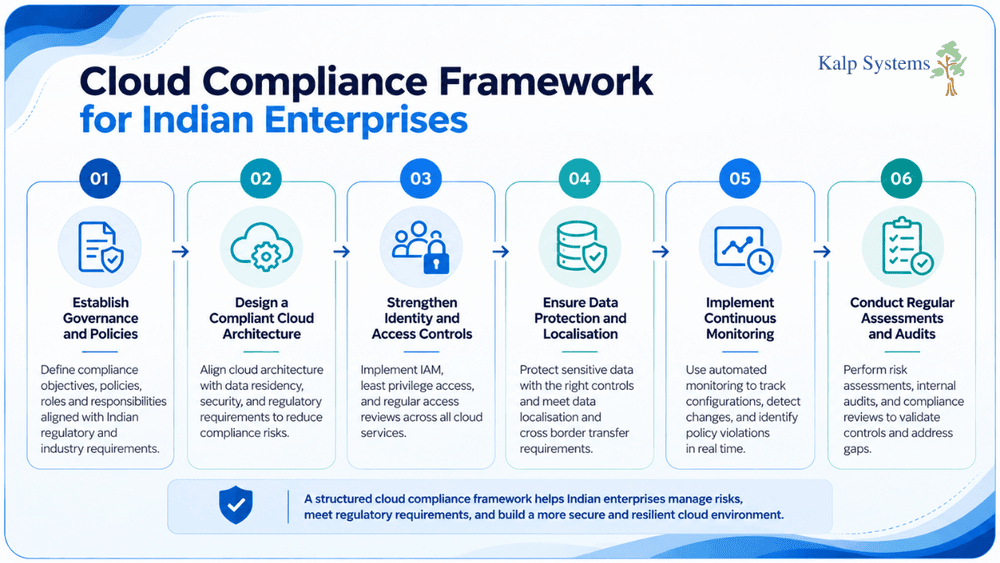
Cloud compliance needs to be considered during everyday cloud operations, not only when an audit is approaching. A useful starting point is to define what can be deployed, how sensitive data should be handled, and which team owns security and compliance control.
Establish a Cloud Governance Framework
A cloud governance framework sets the basic rules for using cloud services. It should identify approved services and architectures, define how data is classified and handled, and make security responsibilities clear.
This gives teams a reference point when they introduce a new workload or change an existing one. It also reduces the chance of different teams applying different compliance practices to similar cloud environments.
Align Cloud Architecture with Regulatory Requirements
Architecture decisions can have a direct effect on compliance. The selected cloud region, storage location, encryption controls, network segmentation, and access model should reflect the requirements that apply to the workload.
Data residency deserves particular attention where information needs to remain within a defined location. The same applies to workloads that process personal or sensitive information across different cloud services.
Strengthen Identity and Access Controls
Cloud access should be limited to what each user, administrator, or service needs. MFA provides an additional authentication control, while least privilege helps prevent unnecessary access to sensitive resources.
Centralised identity management can make permissions easier to manage across cloud services. Access activity should also be reviewed regularly so that unused accounts, excessive privileges, and unusual access patterns do not remain unnoticed.
Implement Continuous Compliance Monitoring
A cloud environment can change without a compliance team being involved in each change. New resources may be deployed, configurations may be altered, and permissions may change as applications are updated.
Continuous monitoring helps identify these changes. Automated checks can look for configuration drift, policy violations, and other conditions that may affect the required compliance posture.
Conduct Regular Risk Assessments and Audits
Risk assessments should cover more than the cloud platform itself. Reviews can include cloud services, configurations, access controls, vendors, and operational processes.
Regular audits provide a way to check whether required controls are working and whether evidence is available to support compliance claims. When a gap is identified, it should be tracked through remediation rather than left until the next review.
Cloud Compliance Standards and Security Requirements
Cloud compliance can involve several standards and regulatory requirements, depending on the type of data being handled and the sector in which the enterprise operates. Indian enterprises may also need to meet international requirements when they work with overseas customers or process information across different jurisdictions.
Standards such as ISO 27001 and SOC 2 can provide a reference for security and control requirements. The relevant framework will depend on the services being provided, the information being handled, and the contractual or regulatory obligations involved.
The important point is to map these requirements to the actual cloud environment. This can include controls for access management, encryption, data protection, monitoring, configuration management, and audit records. A certification or compliance report from a cloud provider can support this process, but it does not remove the need to review how the customer’s own cloud environment is configured and managed.
How Indian Enterprises Can Maintain Continuous Cloud Compliance
Maintaining cloud compliance requires regular attention because the environment keeps changing. New workloads are added, permissions are updated, services are replaced, and configurations can change during routine development and operations.
A practical approach is to keep compliance checks connected to these activities. Cloud teams can review configurations, access permissions, data handling, and third-party services as part of regular operations rather than waiting for a scheduled audit.
Automation can also make these checks easier to manage. Policy-based checks can identify misconfigurations and changes that may create a compliance gap. Infrastructure code and automated checks within CI/CD processes can help identify issues before a new configuration reaches production.
Regular risk assessments still have an important role. They provide an opportunity to review the wider cloud environment, check whether controls remain appropriate, and address gaps that continuous monitoring may not fully explain.
The result is a compliance process that keeps pace with the cloud environment instead of relying only on periodic reviews.
Conclusion
Cloud compliance requires Indian enterprises to keep regulatory requirements, cloud architecture, access controls, data handling, and monitoring aligned. The challenges can become harder to manage as workloads expand across cloud services, regions, and third-party platforms.
A clear governance framework, appropriate security controls, regular assessments, and continuous monitoring can help teams maintain better control over their cloud environments. Requirements should also be reviewed as regulations, workloads, and cloud configurations change.
For Indian enterprises, effective cloud compliance comes from making these checks part of regular cloud operations and keeping responsibility clear across the teams involved.
Frequently Asked Questions
What is cloud compliance?
Cloud compliance is the process of keeping cloud systems and data within the rules that apply to them. Those rules can come from laws, industry requirements, contracts, or security standards. Depending on the environment, this may involve access controls, data protection, monitoring, governance, and audit requirements.
What are the main cloud compliance challenges for Indian enterprises?
There are several areas that can cause trouble. Teams may not have a complete view of where data is stored or who can access it. Cloud provider responsibilities can also be misunderstood. Add changing configurations, data localisation requirements, identity management, monitoring, and third-party services, and keeping track of compliance becomes considerably harder.
How does the DPDP Act affect cloud compliance in India?
The DPDP Act brings personal data into focus. When that data is handled through cloud services, the enterprise needs to keep track of where it is stored and how it is processed. The way the cloud provider handles security, data processing, and related requirements also needs to be considered.
What is the shared responsibility model in cloud compliance?
It depends on which part of the cloud environment you are looking at. The provider is responsible for underlying infrastructure. The customer still has responsibility for its own data, identities, applications, and configurations. For example, a cloud provider may secure the storage service itself, but an incorrectly configured storage resource can still become the customer’s compliance problem.
How can Indian enterprises maintain continuous cloud compliance?
Cloud compliance needs to be checked as the environment changes, rather than only before an audit. A new workload, a changed permission, or a configuration update can affect existing controls. Regular monitoring and automated checks can catch some of these changes, while risk assessments and audits give teams a chance to look at the wider picture.