HomeBlogCyber Security AwarenessCyber Security in India: Global Threats and Local Business Impact
Cyber Security in India: Global Threats and Local Business Impact

Introduction
If you look at how businesses operate today, almost everything runs on digital systems. Payments, communication, customer data, internal operations, it’s all connected.
That convenience has changed how we work. But it has also created a kind of exposure that many organisations don’t fully think about until something goes wrong.
Cybersecurity in India is often still treated as a backend concern. Something technical. Something that can be handled later. The reality is a bit different now. These risks are no longer isolated, and they don’t stay small.
The Changing Nature of Cyber Threats
Cyber threats haven’t just increased; they’ve changed in how they behave.
From Isolated Incidents to Global Threats
Earlier, an attack might affect a single system or a specific target. Now it rarely works like that.
An attack can start in one place and quietly spread across systems, sometimes even across countries. Ransomware shutting down operations, phishing emails slipping through, data leaks that no one notices immediately, these are not rare cases anymore.
And often, it’s not a big failure that causes it. Sometimes it’s just one small gap.
Why Traditional Thinking is No Longer Enough
There’s still a common belief that security can be handled with the right tools. Install something, update something, and the problem is solved.
That approach doesn’t really work the way it used to. Security now is as much about awareness and behaviour as it is about technology. If people don’t recognise risks, even the best tools won’t help much.
Understanding Cyber Offence and Defence
One simple way to understand this space is to look at it from two sides: what attackers do, and how systems respond.
What is Cyber Offence
Cyber offence is basically about finding weaknesses and using them. It could be technical, or sometimes just human error.
Attackers don’t always need something complex. If there’s an easy way in, they’ll take it.
Common Examples of Cyber Offences
- Ransomware that locks access to files until payment is made
- Phishing emails that look real enough to fool people
- Data breaches where information quietly gets exposed
- Malware running in the background without being noticed
- Internal mistakes that open up access unintentionally
What is Cyber Defence
Cyber defence is what organisations put in place to reduce these risks. Not just tools, but also processes and awareness.
It’s less about being perfect and more about being prepared.
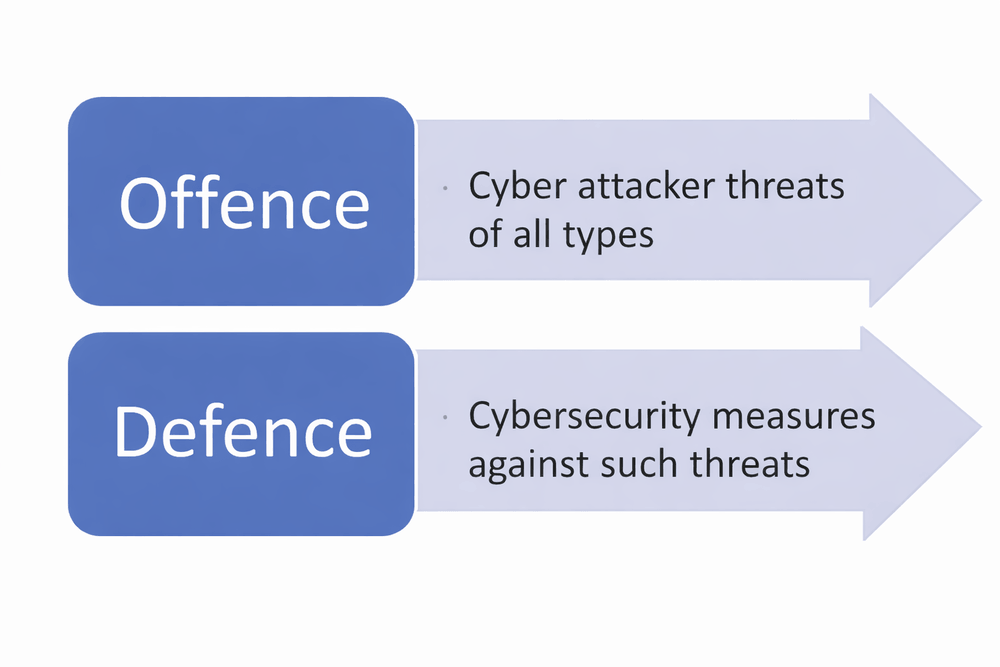
The Continuous Balance Between Attack and Protection
There isn’t really a finish line here. As systems improve, attacks evolve. As defences get stronger, new gaps appear somewhere else. It’s ongoing, and it requires attention over time, not just at one point.
The Indian Perspective: Why It Matters More Than Ever
India is moving fast digitally. That’s clear. Businesses are adopting tools quickly, customers are comfortable online, and systems are becoming more integrated.
Rapid Digital Growth with Emerging Risks
But speed creates its own problems. In many cases, security is not built alongside growth. It comes later. And that delay creates space for issues.
Sometimes organisations assume they are too small to be targeted. That assumption doesn’t really hold anymore.
Impact on Businesses and Individuals
When something does go wrong, the impact is not limited to systems.
It shows up in real ways:
- Financial loss that takes time to recover
- Reputation damage that is harder to fix
- Loss of trust from customers
- Legal or compliance complications
- Day-to-day operations are getting disrupted
And for smaller businesses, even one incident can be enough to create long-term problems.
The Need for a Global and Collaborative Approach
One thing that makes cyber threats different from traditional risks is that they don’t stay within boundaries.
Why Global Cooperation is Essential
An issue in one region can affect systems somewhere else almost immediately.
So, dealing with it in isolation doesn’t really work. There has to be some level of coordination, sharing of information, and common understanding.
India’s Role in the Global Cyber Security Landscape
India has both scale and capability in this space. With the way digital systems are growing here, the country is not just a participant; it can actually help shape better practices. But that depends on how seriously these risks are taken at every level.
Moving Towards a More Secure Digital Future
At some point, cybersecurity stops being optional.
Building Awareness and Responsibility
It’s not just about having a system in place. People need to understand what they’re dealing with.
A lot of incidents still happen because something basic was overlooked.
Shifting from Reactive to Proactive Defence
Reacting after something breaks is always more expensive.
A more practical approach is to reduce the chances of it happening in the first place. Regular checks, controlled access, and consistent monitoring make a difference over time.
Conclusion
The way we rely on digital systems is not going to slow down.
If anything, it’s only increasing. That also means the risks will stay with us. Ignoring them doesn’t make them smaller; it just delays the moment when they show up.
Cybersecurity in India needs more attention, not just from specialists, but from businesses as a whole. Because at the end of the day, this is not just about systems.
It’s about continuity, trust, and operating without disruption.
Frequently Asked Questions
What are the most common cyber threats in India?
Phishing, ransomware, and data breaches are quite common now. They don’t always look obvious, which is why people still fall for them.
Why is cybersecurity important for businesses in India?
Because the impact is not limited to IT. It affects finances, reputation, and customer trust. Once that is damaged, recovery takes time.
How can small businesses improve their cybersecurity?
They don’t need to start big. Even basic steps like secure passwords, employee awareness, and regular updates can reduce a lot of risk.
What role does India play in global cybersecurity?
India has a growing digital ecosystem and strong technical talent. That puts it in a position to contribute meaningfully to global efforts.
What is the difference between cyber offence and cyber defence?
Cyber offence is about exploiting systems, while cyber defence is about protecting them. Both keep evolving, which is why the approach to security also needs to keep changing.